Introduction
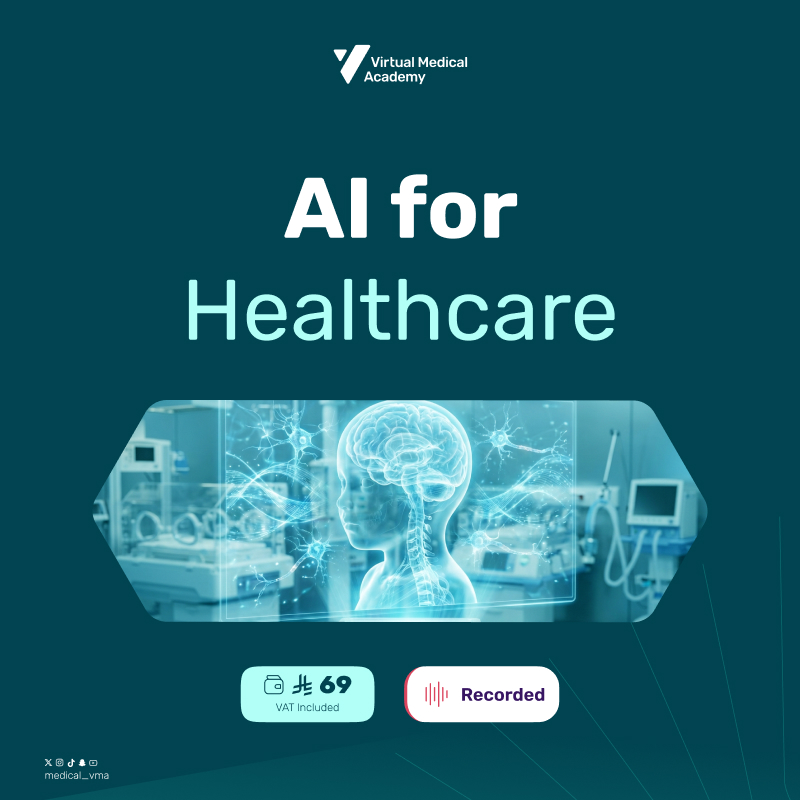
Artificial Intelligence (AI) is increasingly being integrated into pediatric healthcare, yet many clinicians lack structured, practical exposure to how these tools function, where they are currently deployed, and how they can be safely and effectively used in daily clinical practice. This course provides a hands-on, clinically grounded introduction to AI in pediatrics, moving beyond theory to focus on real-world applications that augment — rather than replace — clinical judgment.
Participants will explore existing clinical AI use cases relevant to pediatric settings, including triage optimization, early sepsis detection, and imaging interpretation. The course also introduces AI-powered tools for evidence-based clinical search, operational efficiency, and medical education. Through guided demonstrations, learners will gain direct experience using selected platforms and understand how to integrate them responsibly at the bedside, in education, and in innovation workflows.
A dedicated component of the course focuses on NotebookLM, demonstrating how clinicians and trainees can use AI to organize pediatric cases, clinical guidelines, research literature, and teaching materials into a structured, AI-assisted knowledge environment.
Objectives
By the end of this course, participants will be able to:
1. Clinical AI Application
Describe at least three real-world clinical AI use cases in pediatrics, including:
Triage optimization
Sepsis prediction models
Imaging interpretation tools
Explain how these tools are currently deployed in pediatric clinical settings and how they support clinical decision-making.
2. NotebookLM Mastery
Use NotebookLM to create a pediatric clinical knowledge notebook
Organize clinical guidelines, research articles, and teaching materials into an AI-assisted study and reference environment.
Demonstrate how AI-supported notebooks can enhance learning, teaching, and clinical preparation.
3. Evidence-Based Search
Use AI-powered evidence tools (e.g., Perplexity, OpenEvidence) to efficiently answer pediatric clinical questions.
Synthesize current literature and guidelines to support point-of-care decision-making.
Improve speed and accuracy of evidence retrieval in clinical contexts.
4. Operational Improvements
Identify 3 administrative or operational pain points where AI tools can measurably improve metrics like patient throughout, length of stay, documentation time, and Care consideration
This Course For :
All Healthcare Providers

Price
Course Fee
Full Course
 69
69 See Registration Policies, Cancellations & Refunds
Contact Information
Organization : Virtual Medical AcademyPhone : 920008161
Email : [email protected]
69
VAT Included
 25 Jan 2026 To 30 Jun 2026
  Certificate Available
  Online Recorded
- 1
- PLUS
Add to Calendar
01/25/2026 12:00 AM
06/30/2026 11:59 PM
Asia/ Riyadh
AI for Healthcare
AI for Healthcare
https://medicalacademy.org/portal/event/view/2527